Compensating
- Wired but tired
- Waking at 3am as glucose dips and cortisol answers
- Caffeine-dependent, with a crash when you stop
Steady energy that lasts the day. A clear, focused mind. Feeling genuinely like yourself again. That better baseline is real and within reach, and it's what I'm here to help you build through personalised nutritional therapy.

Move past getting by to genuine vitality, the version of your health you haven't met yet.
Achieve sustainable behaviour change with strategies and systems that set you up for the long game.
Work with a certified NTP, skip the blind spots and rabbit holes, and leapfrog your progress instead of going it alone.
Personalised coaching that meets you where you are and honours your unique needs.
Most of us are told that normal means healthy. But standard lab ranges are built from an average population, and the average person today is tired and under-nourished. Sitting inside "normal" can leave you a long way from feeling optimal.
Here's what this often looks like:
Functioning is what everyone can see, including you. What funds it is hidden: the reserve your foundations build through nutrient stores, steady blood sugar, sleep and recovery. The two don't always agree. Functioning can be paid for from reserve, or propped up by cortisol and catecholamines mobilising fuel that isn't in reserve. Both count as functioning. Only one of them is well.
The map places you by both at once. Wherever you land, there are two moves: rebuild the reserve, or clear what is draining it. Which comes first depends on where you are starting from.
Read more about the modelBeneath the symptoms sit the mechanisms that drain or block your energy. These are the kinds of things we investigate. They are explored and bio-individual, not assumed.
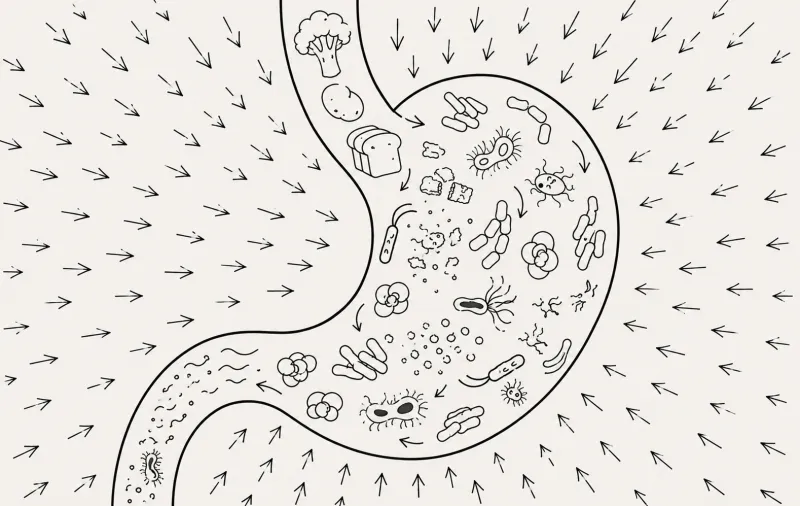
A good diet only counts if your body can break it down and absorb it. Low stomach acid, sluggish enzyme or bile output, or bacterial overgrowth in the small intestine can leave nutrients passing through rather than reaching your cells. And when the gut lining becomes too permeable, it can let through what should stay contained, driving low-grade inflammation that travels to the brain. This is why the gut shapes mood and clarity as much as energy, and often where we start.
Once fuel is in, your body has to use it steadily. When cells stop responding well to insulin, or struggle to switch between burning glucose and fat, energy arrives in spikes and crashes (reactive hypoglycaemia) instead of a steady supply: the blood sugar rollercoaster many people ride all day without knowing it. You can have plenty of fuel on board and still feel flat, foggy and dependent on the next snack, and the swings can steepen for years before anything shows up on a standard test.
A stress response that never fully switches off keeps the body braced. Blood sugar feeds it too: the body treats every crash as an emergency and calls on the adrenals to bring glucose back up, so a rollercoaster day keeps the stress system firing. When cortisol loses its natural rhythm and you live in fight-or-flight, the systems that should be recovering, including digestion and sleep, get pushed aside. It can feel like running on adrenaline: capable on the surface, depleted underneath.
Sometimes energy is lost to a hidden drain. Overloaded detoxification pathways, a low simmer of inflammation, or poor overnight repair can intercept your energy before you ever feel it. This is often what sits behind "my labs are normal, but something still isn't right."
Lasting change doesn't come from a supplement or a quick fix. It comes from getting the basics right. As a Nutritional Therapy Practitioner, I work from a set of core foundations of health.




Beneath the foundations sit a few beliefs that guide how I work, the philosophy behind every plan we build together.
Nutrients only count once your body breaks them down and takes them in. Digestion comes before any supplement.
A body that can switch between fuels easily stays steady, with energy that holds whether or not you have just eaten.
Given the right inputs and fewer obstacles, the body moves toward balance on its own. Much of the work is clearing what gets in the way.
Symptoms are signals worth listening to. We follow what they point at rather than just quieting them.
The ways people ate and lived for generations still hold up. We lean on time-tested practices alongside modern science.
One-to-one nutritional therapy, built around how your body is actually running. Here's the shape of it.
A free, no-pressure call. You tell me what's going on, I explain how I work, and we both decide whether this is the right fit before anything else.
Before our first full session you complete your health history, a short food and mood journal, and a nutritional assessment covering hundreds of symptoms. Together, these show how your body is running and which foundations need support first.
From there you get personalised recommendations, shaped around how you eat, sleep, move and recover. Small changes in the right order, chosen for your body rather than pulled from a template.
This kind of change takes months, so we meet regularly to review progress and adjust as your body responds. Between sessions, I'm an email away. Later, we re-run your assessment so you can see the change on paper as well as feel it.

I spent more than a decade getting my own health back, much of it while running a multimillion-dollar business as CEO. Nutritional therapy is what finally turned things around, reversing three years of chronic symptoms in six weeks. Now, as an NTP, I help you take the direct route I never had.
Join the list to be first to know when doors open in 2027.
No. Most people I see are functional but flat: well enough to get through the day, far from thriving. If that sounds like you, you're in the right place.
No. We focus on adding the foundations your body needs rather than cutting things out. The aim is a more adaptable metabolism, not a stricter set of rules.
No. It works alongside medical care, never instead of it. If something sits outside my scope, I'll tell you and point you to the right support.
New Normal Health opens for clients in 2027. Join the list to be first to know when doors open.
It's built around you: your history, your labs read through an optimal lens, and a plan shaped to your bio-individuality rather than a one-size-fits-all protocol.